
How Long Should You Wait for a Second Date with a Ukrainian Woman?
05.12.2025Some Features of the Ukrainian Language: A Human Look at a Living, Breathing Slavic Identity
Every language carries a world inside it, but the Ukrainian language carries several. It carries the voices of ancient tribes along the Dnipro, the weight of empires that tried to silence it, the laughter of grandparents in small villages, and the quiet pride of a nation learning to speak itself again. When people ask about some features of the Ukrainian language, they expect grammar rules or alphabet charts. But to understand Ukrainian honestly, you have to feel how it lives in people — not just how it is structured on paper.
And if you want to understand Ukrainian women — their warmth, their directness, their emotional depth — you inevitably return to the language they grew up with. The rhythm of Ukrainian speech, the way feelings are woven into everyday phrases, and the cultural memory carried in every word all shape how Ukrainian women communicate, build trust, and express closeness. Language isn’t just a tool for them; it is a quiet thread connecting identity, family, and the way they relate to others.
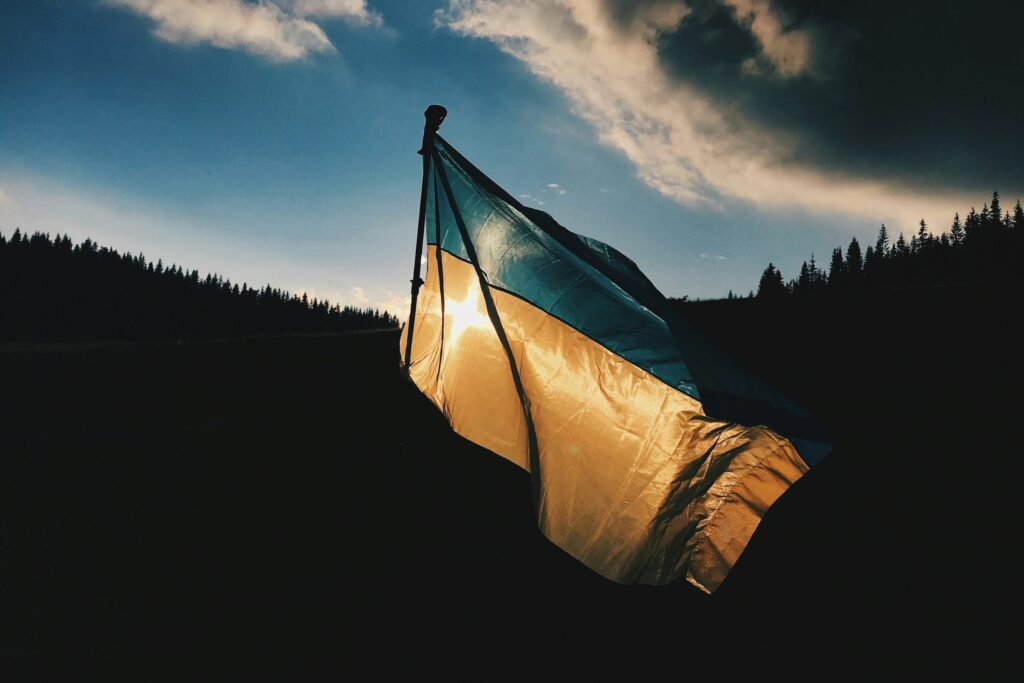
It is, at its roots, an East Slavic language from the Indo-European language family, shaped by the same early currents that produced Belarusian and the Russian language, yet it grew into something unmistakably its own. Calling Ukrainian and Russian “similar” because they share distant ancestry in Kyivan Rus is like saying Italian and Spanish are the same simply because they share Latin. There is a connection, yes — but it ends where identity begins.
Table of Contents
A Language Shaped by History, Silence, and Return
Long before anyone wrote treatises about East Slavic languages, people across Ukrainian territory spoke dozens of tribal dialects. These early voices eventually merged into what we now call spoken Ukrainian. Meanwhile, monasteries and scribes wrote in Church Slavonic, a Slavonic language that sounded nothing like what ordinary people used at home. So from the start, Ukrainian grew out of a split reality — one language for books and another for life.
When the land fell under the Polish Lithuanian Commonwealth, the language absorbed layers of Polish vocabulary and Western European influence. Later, under the Russian Empire, Ukrainian was pushed into the background. It survived, but often secretly. Russian officials insisted it was just “Little Russia,” and banned printing, schools, and even musical performances in Ukrainian.
Yet, despite every ban, the literary Ukrainian language kept resurfacing. Shevchenko, Kulish, and Franko wrote passionately in the language of the people, not in the official scripts imposed by rulers. Their work laid the foundation for the modern Ukrainian literary language, giving Ukrainian not just grammar but dignity.
The twentieth century brought the Ukrainian Soviet Socialist Republic, where the relationship between Ukrainian and Russian grew even more complicated. The USSR allowed Ukraine to exist, but only on a short leash. Russian remained the dominant language, especially in cities and state institutions. Schools in the Ukrainian SSR taught Ukrainian, but often with politics mixed in, and many families switched to Russian for practicality.
Still, even then, the spoken language continued evolving under the surface — in kitchens, villages, folk songs, and unofficial gatherings.
When Ukraine gained independence, the country finally had the chance to rebuild Ukrainian as the official language without fear. That shift didn’t happen overnight, especially in regions that were primarily Russian speaking, but a slow and natural return began. And now, after years of cultural revival and recent political events, Ukrainian has become a symbol of belonging in a way few languages ever manage.
For many Ukrainian women, this linguistic history is also personal. Generations of women kept the language alive at home when public use was restricted. They passed lullabies, sayings, and family stories across decades when speaking Ukrainian was treated as an act of resistance. To this day, many Ukrainian women associate their language with dignity, resilience, and a sense of belonging.
The Alphabet That Tells Its Own Story
If you open a Ukrainian book, the first thing you’ll notice is the alphabet. The Ukrainian alphabet, based on the Cyrillic alphabet, contains letters that don’t exist in modern Russian — like Ґ, Є, Ї, І. These aren’t just decorative. They carry sounds deeply rooted in Ukrainian identity and help distinguish Ukrainian from Russian languages that share the Cyrillic base.
The script changed many times across history. During the nineteenth century, scholars shaped the first version of what later became the modern Ukrainian alphabet. Under Soviet rule, some letters were removed or simplified; after independence, scholars restored what belonged to Ukrainian tradition. Every shift left a tiny mark — a reminder that even the alphabet wasn’t safe from politics.
The Melody of Ukrainian Speech
People often say Ukrainian sounds melodic. That isn’t just a romantic notion. Ukrainian relies heavily on open vowels, soft endings, and a rhythm that rises gently rather than drops sharply. It uses sounds absent in Russian or Belarusian, giving it a softness you can hear even if you don’t understand the words.
When listening to Ukrainian speech, you may notice:
- vowels that stretch gently
- a smoother balance between consonants and vowels
- a naturally “sung” intonation
- a distinctive difference between І and И
- softer forms where Russian tends to be harder
Compared to other Slavic languages, especially Russian, Ukrainian feels lighter. This is why Ukrainian folk songs and Ukrainian language films often sound emotional even to non-speakers. There’s a warm, human quality built into the sound itself.
This melodic quality often echoes in how Ukrainian women speak in daily life. Their communication style tends to be warm, expressive, and emotionally clear. The softness of Ukrainian sounds shapes not only pronunciation but also the tone of conversations — especially when they talk about family, feelings, or personal values.
Grammar: Beautiful, Complicated, and Entirely Its Own
Like any Slavic language, Ukrainian grammar is not the easiest companion for beginners. It is a richly inflected language with:
- seven cases
- complex adjective endings
- gendered nouns
- a detailed system of Ukrainian verbs
- perfective and imperfective aspects
- flexible word order that depends on meaning, not position
Although Ukrainian grammar shares roots with Russian grammar, the differences can be surprising. Word endings, verb forms, sentence melody, and vocabulary diverged long ago. A russian word might have a distant cousin in Ukrainian, but the usage often evolved differently.
This complexity is also what makes Ukrainian expressive. A single sentence can be rearranged to emphasize emotion, not just meaning — a feature many learners come to appreciate.
Dialects, Surzhyk, and the Many Voices of Ukrainian
Ukraine is large, and languages grow differently depending on who speaks them. Over the centuries, Ukraine developed several Ukrainian dialects:
- northern
- southeastern
- southwestern, influenced by Austrian rule and Polish culture
These dialects don’t prevent communication — the language is still mutually intelligible across regions — but they color speech with local warmth.
Then there is Surzhyk, a mixed speech combining Ukrainian grammar with heavy Russian vocabulary. It emerged naturally during the Soviet period as people navigated between two languages at once. Linguistically, it isn’t standard, but culturally, it tells a real story about how people lived.
Members of the Ukrainian diaspora add another layer. Communities in Canada, the U.S., Brazil, and Europe hold onto older forms of Ukrainian, shaped decades ago by immigrants who brought their western Ukrainian dialects with them.
Literature, School, and the Cultural Thread
The soul of the language is easy to see in Ukrainian literature. For more than a century, books and poetry helped define national consciousness even when politics tried to erase it. Today, Ukrainian is the language of instruction in every Ukrainian school, not just a subject but a cultural anchor.
In independent Ukraine, Ukrainian became a bridge between modern life and centuries-old traditions — from the Greek Catholic Church in Galicia to regional customs in small villages.
And yet, it remains open to new influences from other languages. English, German, and French contribute modern vocabulary, just as Polish and Romanian did long ago.
Why Understanding the Language Matters in Online Conversations
If you’re speaking online with someone who says they’re from Ukraine, knowing some features of the Ukrainian language helps more than you might imagine. Real Ukrainian speakers write and speak in patterns that feel natural, while scammers often rely on machine translation or awkward mixing of Ukrainian and russian.
Examples real people notice instantly:
- Incorrect order of Ukrainian and Russian words
- repeating the same phrase in both languages
- using Russian grammar inside Ukrainian sentences
- unnatural vocabulary not found in Ukrainian languages
This doesn’t mean everyone who makes a mistake is dishonest — languages are messy. But spotting unusual patterns can help protect you emotionally and financially.
Final Thoughts: A Language That Refuses to Disappear
The story of Ukraine is the story of survival. Despite the pressure of the Russian government, despite centuries of bans in the Russian Empire, and despite the complicated reality of the Soviet Union, Ukrainians endured. It rebuilt itself through poetry, through families who kept it alive at home, through scholars who protected it, and through a nation that ultimately chose to speak in its own voice.
Today, the modern Ukrainian language is strong and proud — a symbol of freedom, belonging, and continuity. Whether you are learning Ukrainian, speaking with Ukrainians online, or simply curious about the language, remember that every word carries history and human experience.
And if you ever feel unsure whether the person you’re speaking with is real or using scripted messages in Ukrainian or Russian, Verified Love is always there to help you look deeper.
Understanding these layers of the Ukrainian language also helps you understand the women who speak it — their cultural memory, their communication habits, the emotional honesty many of them value, and the pride they carry in preserving their identity.