
11 Rules for Dating in Your 30s: What Men Learn When Dating Ukrainian Women
23.02.2026
Where Are Slavic Women From? Origins, Countries, and Cultures
13.03.2026What Is a Slavic Face: Features, Types, and Myths
This article answers one common question—what is a Slavic face—in a way that’s useful for readers curious about appearance, anthropology, and the modern “Slavic look” discussion online. The goal is not to box anyone into a stereotype. It’s to explain what people usually mean by slavic face, why the idea is complicated, and how regional history in slavic countries shaped a wide range of facial features across different countries.
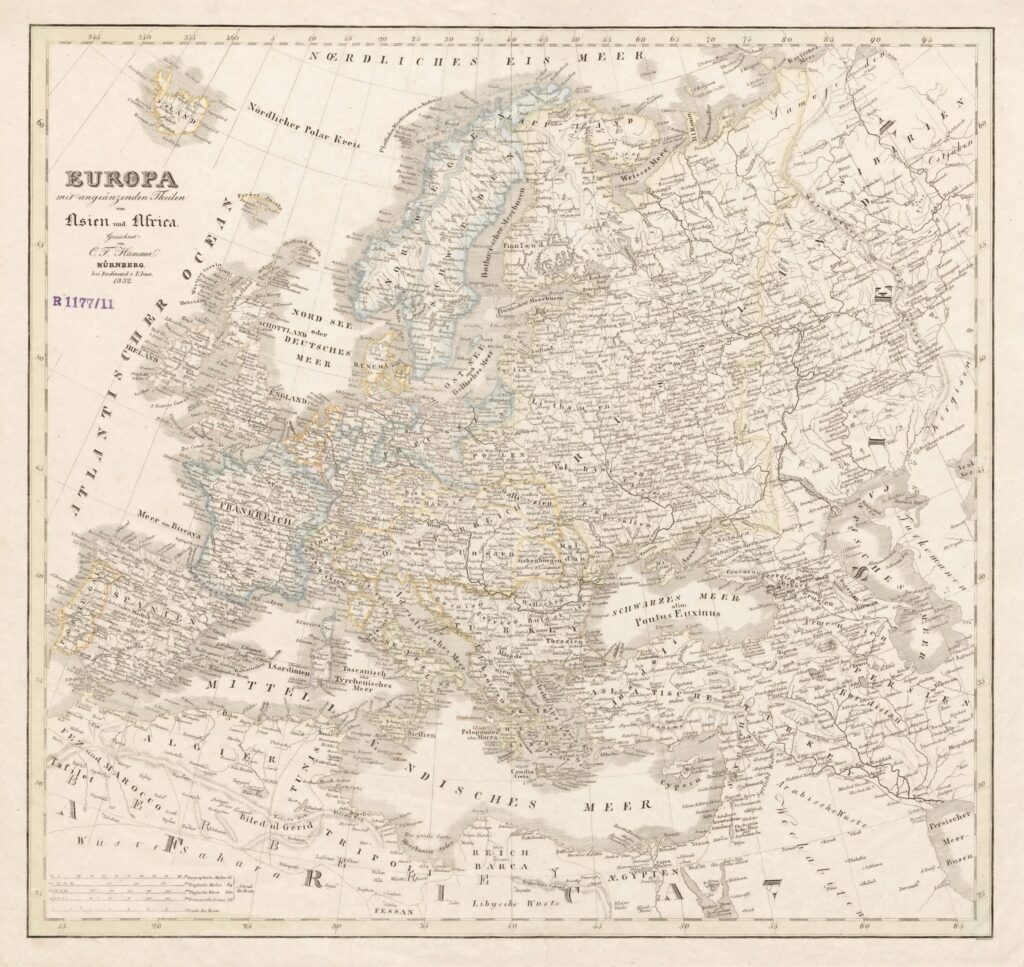
If you came here expecting a single template for a slavic looking face, you’ll quickly see why that doesn’t exist. There are roughly 360 million slavic speakers worldwide, from poland and slovakia to ukraine, russia, serbia, croatia, and macedonia, with plenty of mixing across eastern europe, the balkans, and the rest of europe. One “average slavic face” is a myth—yet certain traits are repeatedly cited, especially in social media trends.
The phrase slavic appearance is used in everyday conversation, beauty content, and even search queries like what are slavic features, slavic features face, or what is a slavic face. In most cases, people aren’t describing a strict “type.” They’re describing an impression: a set of traits that often appear together in parts of eastern europe and get labeled “Slavic” online.
A key warning up front: no country, not even the same country, has one uniform look. Slavic people are diverse in skin tone (from pale skin and fair skin to slightly tanned), hair color (from blonde hair or blond hair to brown hair and dark brown hair), and eye color (including blue eyes and brown eyes). This article covers regional variation—especially among eastern slavs and south slavs—and explains how TikTok and Instagram turned “Slavic face type” into an internet label.
Table of Contents
Key Facial Features
When people ask what are slavic features, they usually list a mix of traits that show up frequently in online descriptions. These traits can be seen in many populations around the world, not only among slavs, so think of them as “commonly cited,” not exclusive.
Commonly cited traits
- High cheekbones or prominent cheekbones
- A face that can read as either broad faces with softer contours or a more angular face
- A straight or slightly upturned nose (though many variations exist)
- Light to medium skin tones, often described as light skin, fair skin, or pale skin, sometimes with freckles
- Eye colors commonly mentioned include blue, gray, green, and brown eyes
The role of skull shape
In anthropology, skull shape is only one piece of the puzzle, but it influences how the forehead, cheekbones, and jaw appear. Many people described as “Slavic-looking” have a rounded or slightly elongated head shape, which can create softer midface contours. Others have stronger jaw definition and a sharper cheekbone line.
Skull-diagram examples (for clarity):
- Diagram A (rounded cranial form): fuller midface + softer cheek line + smoother forehead slope
- Diagram B (more elongated form): narrower midface + more visible cheekbone ridge + more pronounced jaw
These are simplified examples, not a checklist for identifying anyone.
Eyes and nose variation
Even within eastern european type descriptions, eye shapes vary widely. Some people have an upper eyelid fold that becomes more noticeable with age, others don’t. Nose profiles range from straight to gently curved to slightly snubbed. A “typical Slavic nose” is more of a story people tell than a rule.
What People Mean by “Slavic Face”
“Slavic face” as an internet label
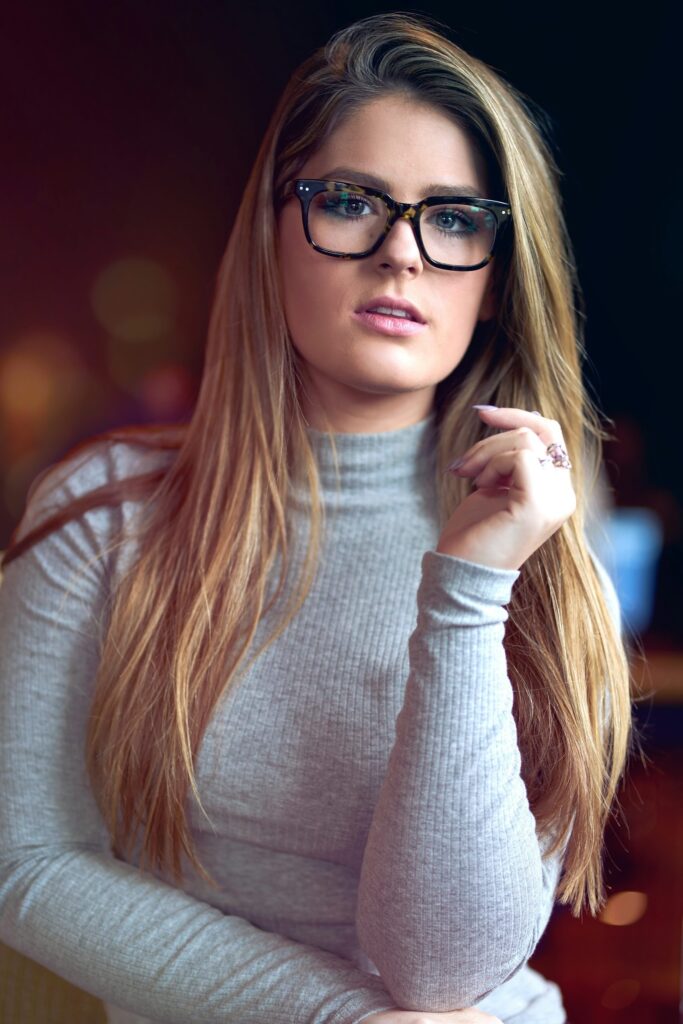
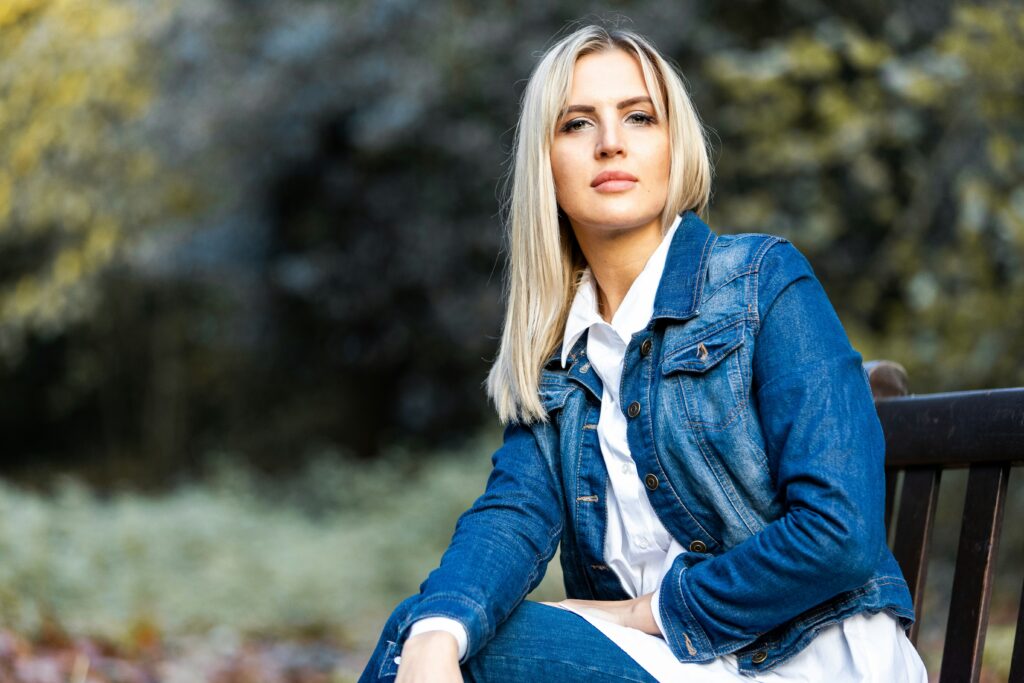
On TikTok and Instagram, slavic face often means a stylized aesthetic: sharp contouring, emphasized cheekbones, neutral expression, and a camera angle that creates a strong “presence.” Makeup and posing do a lot of work here. People may copy the look using contour, highlight, brow shaping, and lip techniques—sometimes paired with a “serious” expression.
This is why slavic face type gets treated like a trend. It’s less about a real population and more about a set of visual cues that can be recreated.
It’s also why the term is often confused with “Eastern European look.” A viral photo set from Kyiv, Warsaw, or Moscow gets labeled “Slavic,” even if the person’s background is unknown.
Slavic vs Eastern European: not the same thing
“Slavic” is primarily an ethnolinguistic label: slavic tribes spread and evolved into groups of slavic speakers with shared language families and overlapping history. “Eastern Europe” is a geographic term that includes many groups who are not Slavic, plus centuries of mixing with neighbors—germans in central regions, greek influence around the Black Sea, and many others who moved through the area.
So, when someone asks what is a slavic face, the most accurate answer is: it’s a modern shorthand that blends cultural identity, regional history, and internet styling into one label.

High Cheekbones and Bone Structure
High cheekbones are a frequent talking point in “Slavic face” conversations. They can create a defined midface line even when the rest of the face is soft. But cheekbone prominence exists across many populations, so it doesn’t prove anything on its own.
Rounded vs angular
- In many “soft” descriptions, people talk about rounded faces with gentle cheek fullness and a smooth jaw.
- In other descriptions, the emphasis is on an angular face, with strong cheek definition and a more visible jawline.
Both can occur among slavic people. Variation depends on region, family background, and the long history of people living and intermarrying across borders.
South Slav Characteristics
When people talk about south slavs—including many in the balkans such as serbia, croatia, and macedonia—they often mention slightly darker pigmentation on average compared with northern areas. You’ll find more frequent darker hair, including dark brown and black shades, and a wider range of complexions that can be fair, olive, or slightly tanned.
Mediterranean admixture influences
The Balkans are a crossroads region. Over centuries, they interacted with surrounding populations, trade routes, and empires. That history can show up in a broader range of skin tones, hair textures, and facial structures.
Balkan photo examples (captions you can use)
If you build a gallery on your site, keep it diverse and avoid turning it into a “ranking.”
- “Portrait from coastal Croatia: warm undertones, dark hair, soft jawline”
- “Street photo from Serbia: varied eye colors, mixed facial structures”
- “Family snapshot from North Macedonia: different generations, different looks”
(Use licensed images or your own photography, with clear permissions and attribution.)
Baltic Type (Northern Slavs)
The baltic type is one label that appears in older discussions about northern Slavs, often referencing northern regions of Russia and neighboring areas that experienced mixing with Baltic and Finno-speaking populations. Whether or not you like the label, the observed trend people describe is lighter pigmentation and, in some areas, a tendency toward light hair and lighter eyes.
Commonly described traits
- Fair haired or lighter shades (including blonde and blond)
- Light eyes, often blue eyes
- Complexions described as light skin or fair skin
- A face shape that can be broader or more rounded in some families
Visual comparison: Baltic vs South Slav
A Baltic-leaning look is often described online as lighter hair/eyes and a softer palette; a South Slav-leaning look is often described as more frequent darker hair/eyes and warmer undertones. Both descriptions have wide overlap and many exceptions.
Slavic Girl: Beauty Standards and Stereotypes
The phrase slavic girl is heavily loaded online. It often comes with a bundle of beauty tropes, some flattering, some reductive. If you want to talk about slavic women respectfully, it helps to name the stereotypes and then drop them.

Common “slavic girl” tropes to address
- “Always very pale skin and high cheekbones”
- “Always long hair” (often blonde hair, light brown, or dark brown hair)
- “Always serious or cold”
- “All look the same” across slavic countries
These tropes flatten real people into a costume. They also ignore the diversity of slavic women characteristics and the everyday reality that style choices differ by city, age, and lifestyle.
Culture and styling matter
In many cities across eastern europe, appearance and grooming can carry social meaning. That can influence how women present themselves in photos: a polished hairstyle, defined brows, and a put-together look. This is not “genetics.” It’s culture, norms, and personal preference.
Avoid essentialist language
Avoid statements like “Slavic women are all…” or “Russian women always…” because they erase individual reality. If you want to talk about a look, describe the look—not a whole group.
How to Identify a Slavic Face (Practical Guide)
If you’re asking how to spot a slavic woman face or female slavic face, the honest answer is: you can’t do it reliably. You can notice traits that are commonly associated with certain regions, but you can’t identify ethnicity from appearance with high confidence.
A short observable-traits checklist (probabilistic, not definitive)
- Cheekbone prominence: soft-high or sharply defined
- Face outline: rounded vs more angular face
- Eye palette: light eyes, mixed, or brown eyes
- Nose profile: straight, slightly curved, or slightly upturned nose
- Skin tone range: pale skin, fair skin, light skin, or slightly tanned
- Hair range: blonde, blond, light brown, brown hair, dark brown, dark brown hair
Ethical language recommendation
Instead of “she has a Slavic face,” use:
- “She has strong cheekbones and a balanced profile,” or
- “Her style looks Eastern European,” if you mean styling and presentation.
That keeps your description human and respectful.
Genetics and Historical Mixing
A big reason there is no single slavic phenotype is historical mixing. The movement of slavic tribes, local populations, and neighboring groups created layers of diversity.
Migration and admixture (simple summary)
- Eastern Slavs (often discussed around ukraine, russia, and belarus) share some genetic affinity, but with notable regional differences.
- Northern areas of Russia historically mixed more with Finno-speaking and Baltic-speaking peoples.
- Southern Slavic regions in the Balkans reflect mixing with populations who lived there before Slavic migration, plus later historical layers.

Caution about genetics-as-destiny
Genetics can explain broad population patterns, but it doesn’t predict how an individual will look. Two siblings can look very different. Treat ancestry as background, not a verdict.
If you include references, link to accessible population genetics summaries and explain limits clearly. Don’t turn genetic data into a ranking system.
Visual Examples and Resources
A strong article should show diversity rather than cherry-picking the same influencer face.
Photo gallery idea (diverse and ethical)
- Urban street portraits from poland, ukraine, russia, slovakia, serbia, and croatia
- Mixed age groups (not only young girls)
- Different hair colors: blonde hair, brown hair, dark brown hair, light hair, darker hair
- Different skin tones: pale skin to slightly tanned
Permission and attribution steps
- Use licensed images (Unsplash, Pexels, Wikimedia where appropriate)
- Follow license rules
- Add captions that describe the photo, not the person’s assumed ethnicity
Recommended anthropological image sources
- Museum collections and university archives that allow public educational use
- Peer-reviewed summaries of European population variation (keep it simple for readers)
Comparison Charts and Tables
Below is a simple comparison table. It shows patterns often discussed online, with a reminder that overlap is huge.
| Region / label (informal) | Eyes | Nose | Cheekbone prominence | Notes (overlap + exceptions) |
| Baltic-leaning (northern areas) | blue/gray/green common, also brown | often straight | can be moderate to high | more light hair reported; many exceptions |
| Eastern Slavs (broad category) | mixed: blue to brown eyes | straight to slightly curved | often noted as high | includes ukrainian, russian, belarus diversity |
| South Slavs (Balkans) | mixed, often darker overall | wider range | moderate to high | more frequent darker hair; many fair-skinned people too |
This isn’t a diagnostic tool. It’s a map of how people talk about appearance, not a way to label strangers.
Ukrainian Context
Why Ukrainian women get labeled “Slavic look” online
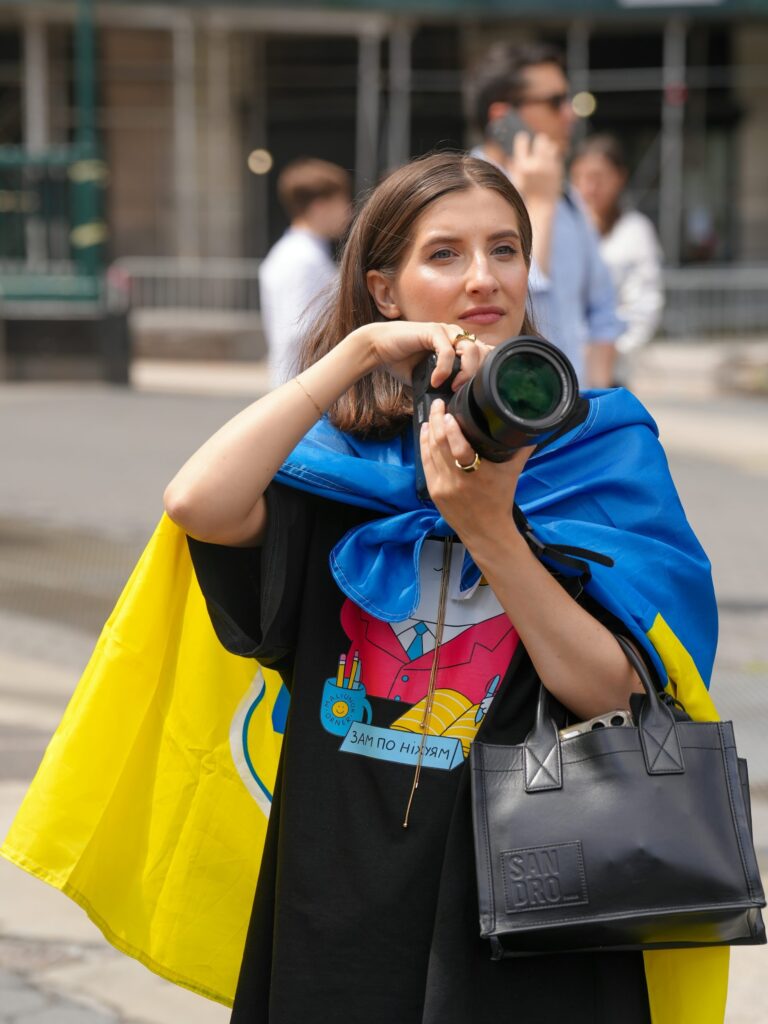
Part of the online fascination with Ukrainian women comes from city styling. In major cities in ukraine, a polished look is common in photos: well-kept hair, tailored outfits, and confident presentation. That makes the “Slavic look” easy to brand and repeat.
Regional diversity inside Ukraine
Ukraine contains different regional histories and family backgrounds. Western, central, southern, and eastern areas can show different mixes of features. Kyiv and other large cities are especially diverse because they attract people from across the country. If someone tells you all Ukrainian women look the same, they haven’t spent time paying attention.
How to compliment a Ukrainian woman without stereotypes
Good examples:
- “You have great style—your look is really put together.”
- “Your eyes are very expressive.”
- “I like how confident you seem in your photos.”
What to avoid:
- “You Slavic girls are all the same.”
- “You look cold and unapproachable.”
- “Mail-order bride” jokes or anything that turns a person into a category.
A respectful compliment focuses on the individual, not the label.
Why These Labels Can Be Harmful
When “Slavic face” becomes a trend, it can slip into objectification: treating a face type like a product. It can also spread ethnic clichés: “cold,” “unapproachable,” “dominant,” or “submissive.” Those labels affect self-image and make real dating conversations harder.
If you’re interested in someone, the best move is to drop the template and learn the person. The strongest relationships are built on communication, values, and effort—not a guess about ancestry based on cheekbones.
Conclusion
So, what is a slavic face? In practice, it’s a mix of:
- a loose cultural and regional label,
- a social-media aesthetic,
- and a set of commonly cited traits that vary widely across slavic countries.
There is no single slavic face type, no guaranteed slavic characteristics checklist, and no reliable way to identify someone’s background from appearance alone. If you want to go deeper, read about European regional history, population movement, and how online beauty trends repackage the same ideals under new names.
For further reading, explore prompts like: “how do beauty trends travel across cultures?” and “how does styling shape perceived ethnicity?”
FAQ
What is a Slavic face?
A popular label for a look commonly associated online with Slavic regions—often involving cheekbones, certain styling, and sometimes a “serious” expression. It’s not a scientific category.
Is “Slavic” a race or an ethnicity?
“Slavic” is primarily an ethnolinguistic grouping tied to language, culture, and shared history. It is not a single race.
Do all Slavic people look similar?
No. Slavic people are diverse across different countries and even within the same region.
What is the “Slavic stare”?
An internet trend describing a neutral, intense expression often paired with makeup and posing. It’s a style choice, not a personality trait.
Are Ukrainian women all “Slavic-looking”?
No. Ukrainian women vary widely by region, family background, and city culture. Kyiv alone shows huge diversity.
How can I compliment a Slavic/Ukrainian woman respectfully?
Compliment specific features or style without generalizing: “You have great style,” “Your smile is beautiful,” “You look confident.”
Why do these labels go viral on social media?
They’re easy to package: a short name, a recognizable photo style, and a trend people can copy using makeup, lighting, and filters.